PEAR · TYPE → PLACE → FEEL
How to Tell If a Pear Is Ripe
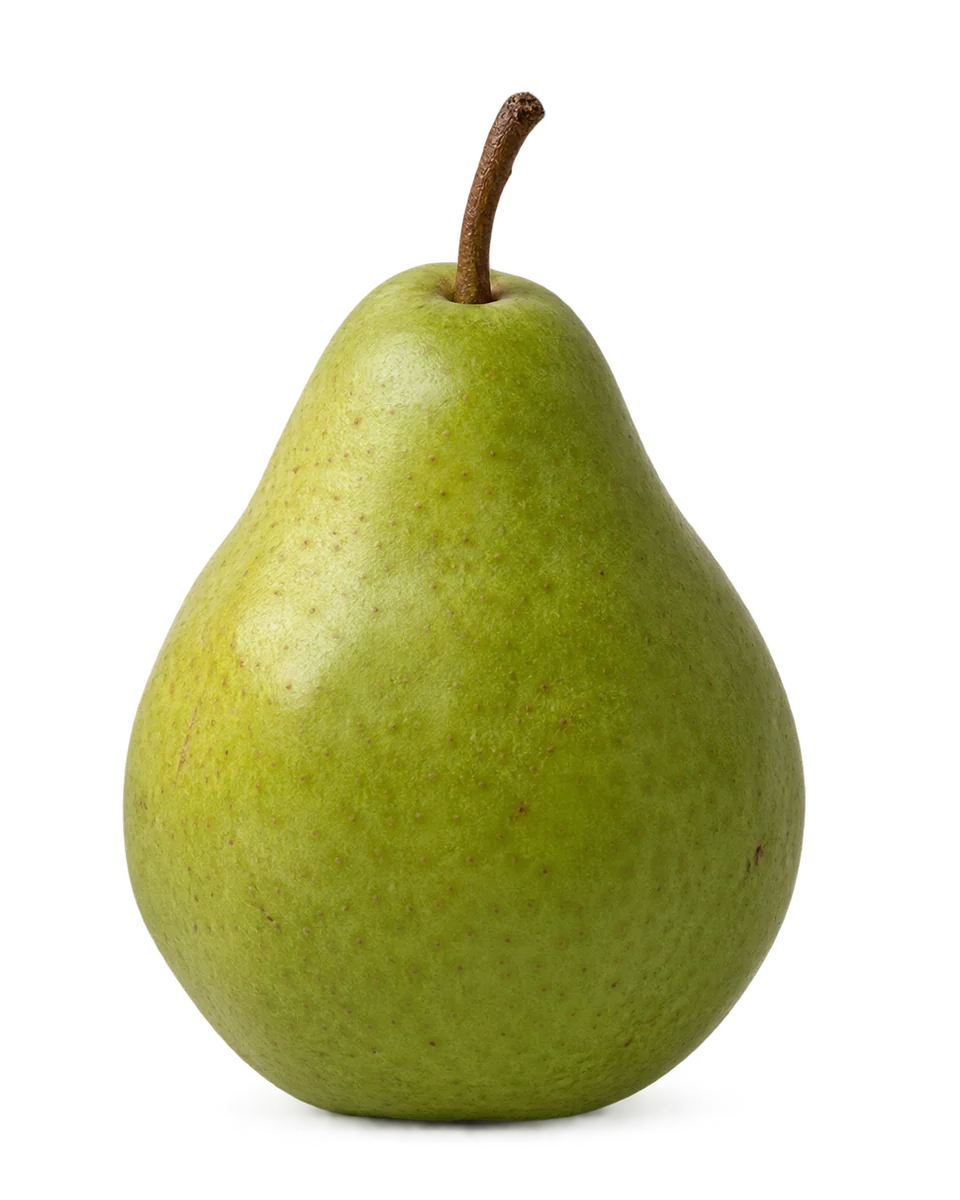
For most European pears, gently press near the stem. If the neck gives slightly, the pear is ready to eat. Do not wait for every pear to turn yellow, and remember that Asian pears follow a different rule: ripe Asian pears stay crisp and firm.
CHECK THE NECK.Start with the type: European pears usually soften after harvest. Asian pears are commonly sold ripe and crisp.
QUICK CHECKS
TYPE
European or Asian?
NECK
Press near the stem
COLOR
Useful for some varieties
DAMAGE
Bruising isn't ripeness
PLAN
Match ripeness to timing
HOW TO PICK
01
KNOW YOUR TYPE
European and Asian pears follow different readiness rules. Use the variety label or ask the seller; shape is a useful clue.
VARIANT LAB · TYPE FIRST
WHICH PEAR DO YOU HAVE?
A necked European pear usually softens after harvest. A rounder Asian pear can be ripe while crisp.
European pear
BARTLETT · ANJOU · BOSC · COMICERIPENS AFTER HARVEST.
Usually has a defined neck and softens after picking. The useful household check is beside the stem.
Slight give at the neck, with sound skin and healthy structure. Bosc can give less than other European pears.
Check European pearAsian pear
ASIAN PEAR? DIFFERENT RULE.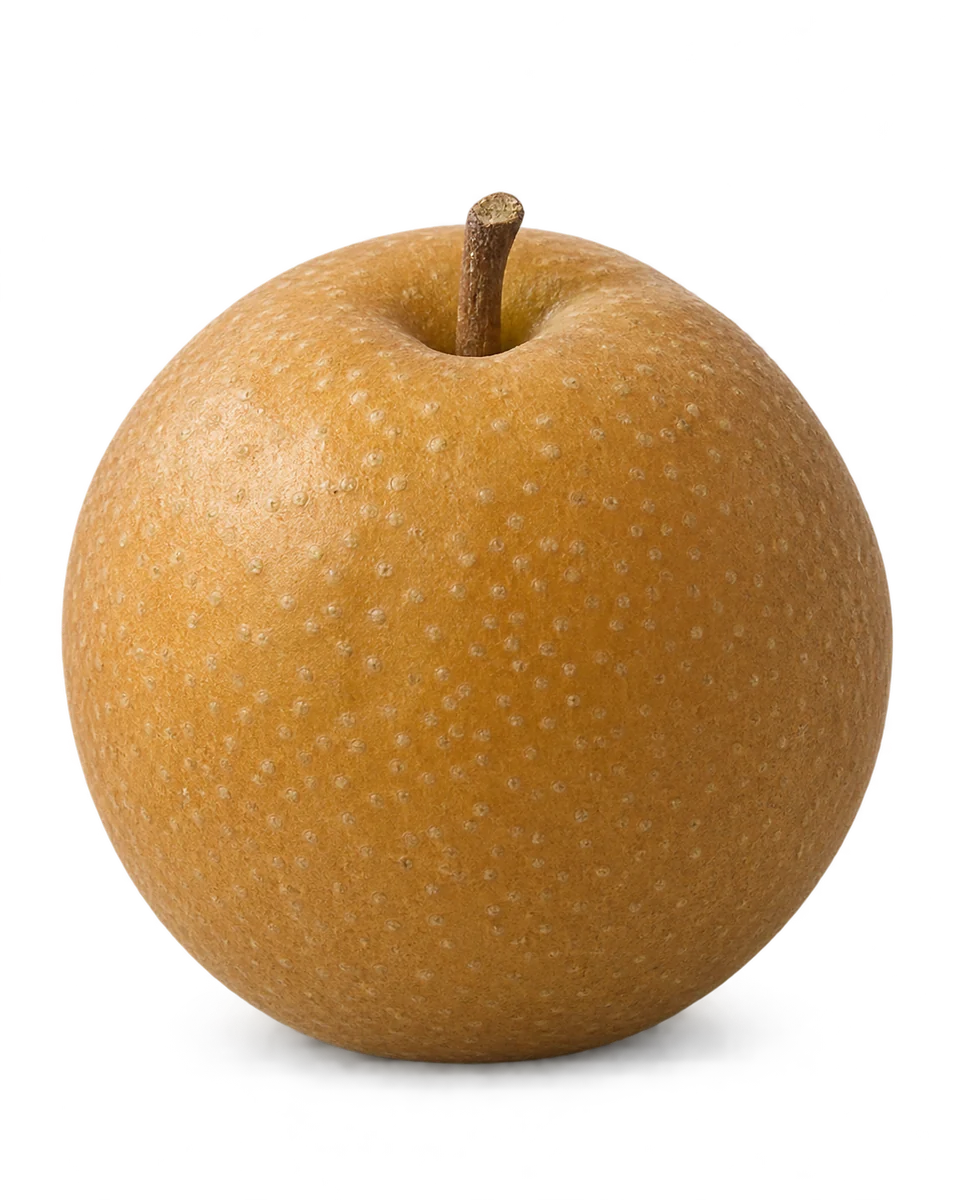
CRISP CAN BE RIPE.
Hosui, Nijisseiki and Shinseiki are examples. Asian pears are commonly sold ripe and ready to eat while firm and crisp.
Choose healthy structure and sound skin. Sweet, juicy flesh can stay crisp; do not wait for European-style softness.
Check Asian pearTYPE FIRST
Two types. Two paths.
Use the European neck test for European pears. Choose Asian pears by their type and healthy condition.
European pear
- VERY FIRM NECK
Almost no give beside the stem. Allow more ripening time.
WAIT - SLIGHT GIVE AT NECK
Gives a little to gentle pressure and still holds its shape.
READY NOW - BODY SOFT
May be past peak. Inspect for bruising, abnormal soft pockets or decay.
EAT SOON / INSPECT
Asian pear
- FIRM / CRISP + HEALTHY CONDITION
Crisp can be ready. Avoid significant bruising, localized mushiness and decay.
READY
02
CHECK THE NECK.
Hold gently. Press lightly, just below the stem.
Support the pear in your hand. Use light thumb pressure beside the stem, without poking with a fingernail. A little give means ready for most European pears. Bosc may feel firmer when ready.
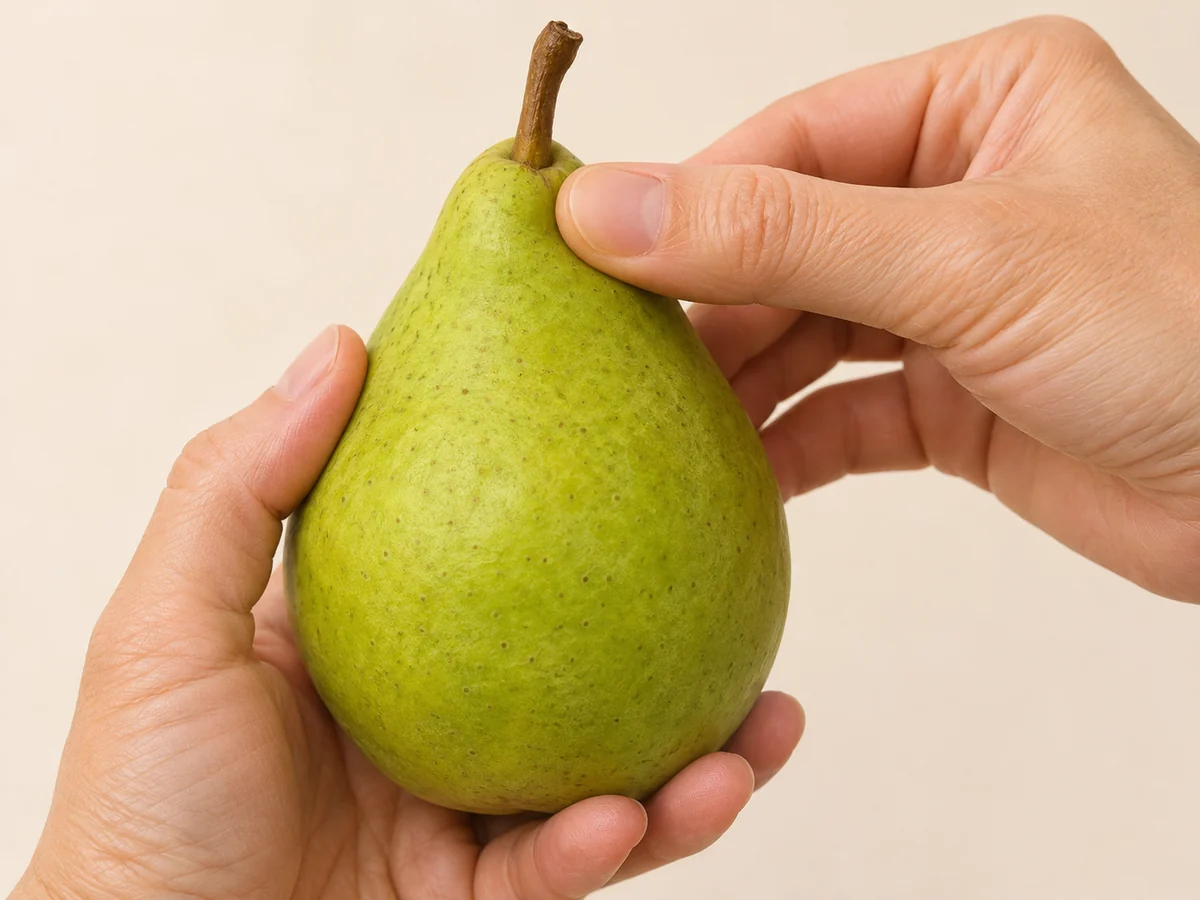
Try each feel. Use gentle pressure at the neck; the final example checks a body that is already soft.
VERY FIRM AT NECK
NOT YET
Almost no give beside the stem.
SLIGHT GIVE AT NECK
READY TO EAT
Yields a little and still holds its shape.
SOFT THROUGH BODY
EAT SOON / INSPECT
The middle is already noticeably soft. Check the condition before using it.
03
DON'T PRESS THE BELLY.
The useful check is higher up.
European pears ripen from the inside out. If the middle is already noticeably soft, the pear may be overripe. Check beside the stem first and avoid squeezing the broad body, which can bruise the fruit.
Slight neck give is the cue. A soft body calls for inspection.
NECK · PRESS HERE
Light thumb pressure just below the stem.
BELLY · DON'T SQUEEZE
Noticeable body softness can mean you have waited too long.
04
COLOR DEPENDS ON THE VARIETY
Bartlett changes. Many others don't.
Color is a supporting clue for some varieties. Confirm readiness by gently checking the neck and inspecting the fruit's condition.
Bartlett
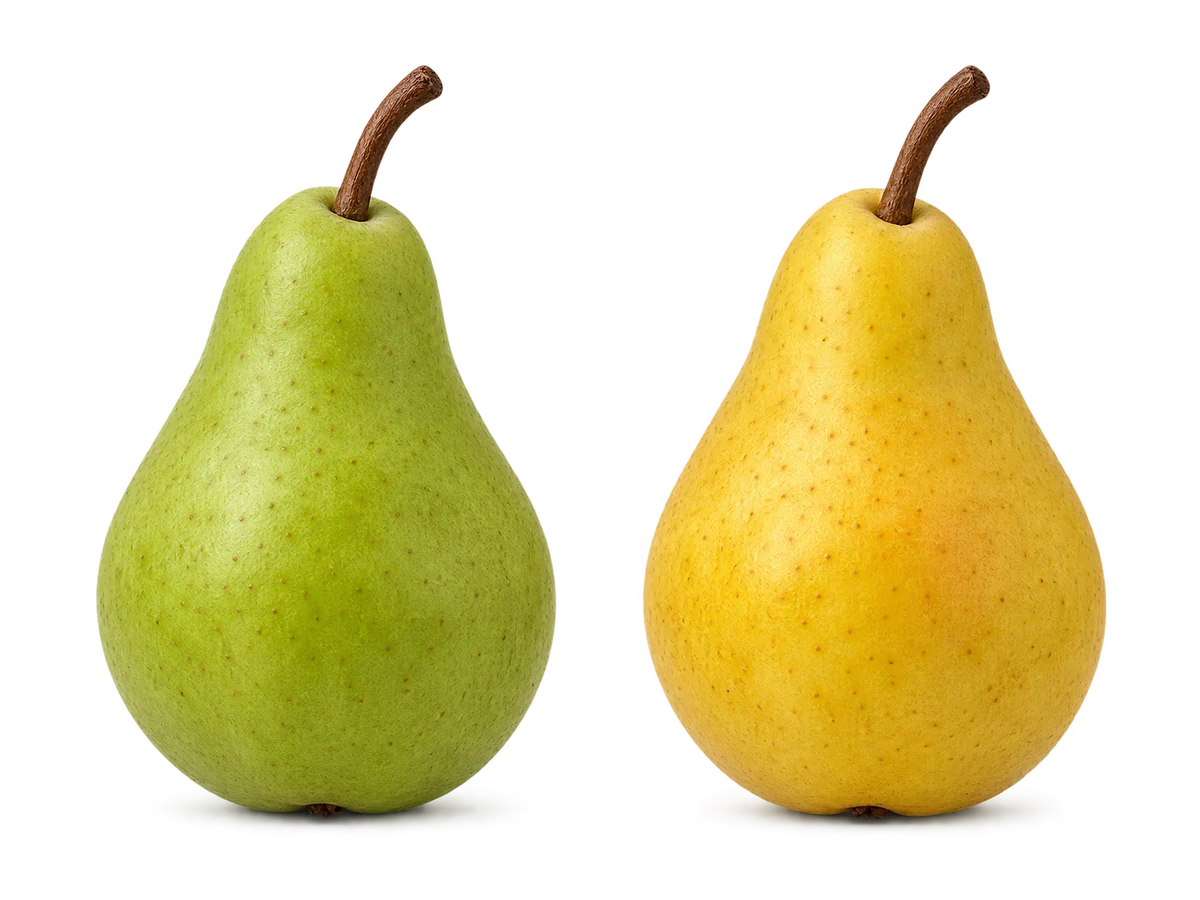
Yellow Bartlett pears typically change from green toward yellow or golden as they ripen. Yellow alone does not guarantee perfect condition.
Anjou
Anjou does not dramatically change color as it ripens. Green Anjou can stay green when ready to eat.
Bosc
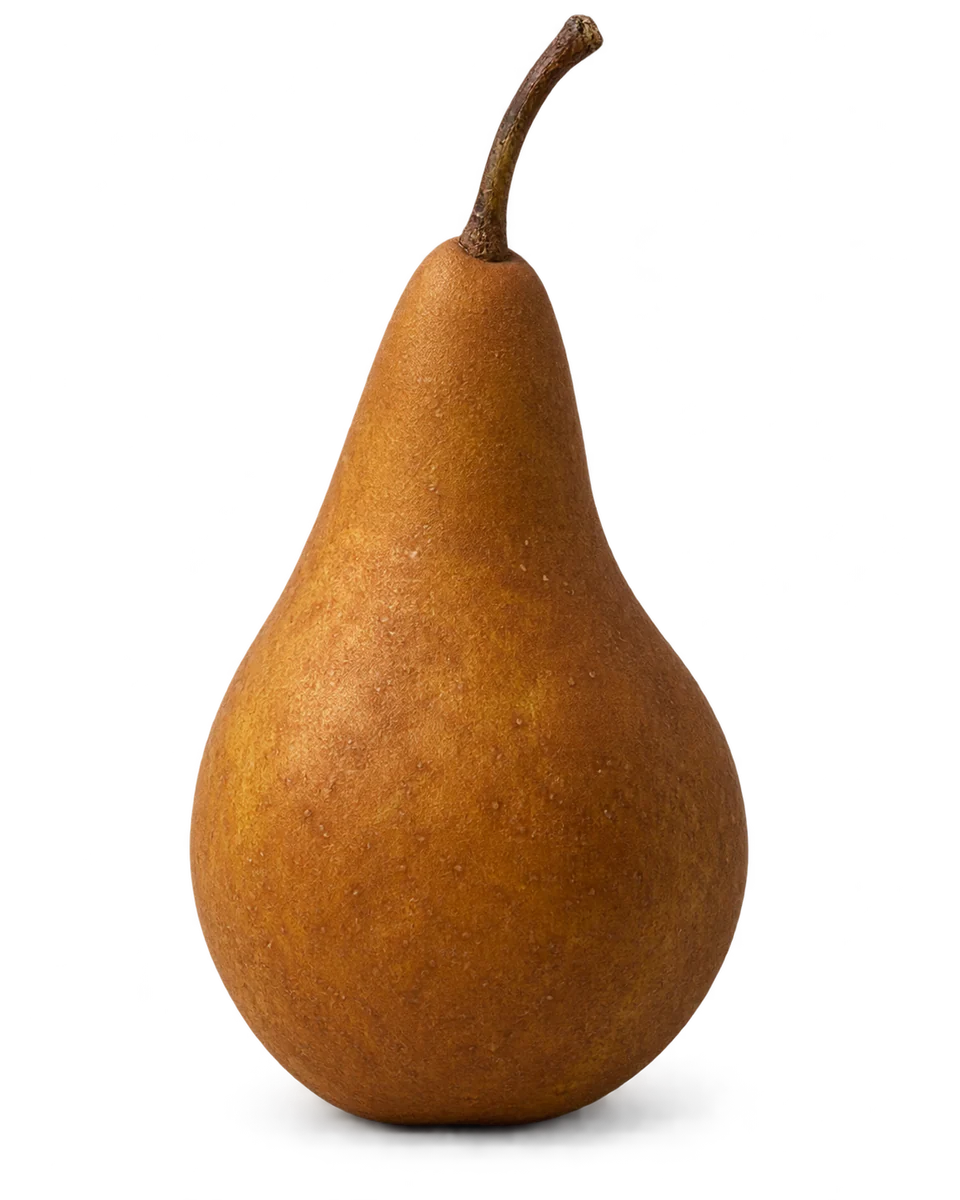
Natural cinnamon-brown russeting is part of Bosc skin. Color change is limited, and a ready Bosc can give less than other European pears.
Comice
TRUST THE NECK.Color is not the main test. Its delicate skin may show superficial marks; a mark alone does not establish interior damage. Handle gently and inspect meaningful bruising.
AT A GLANCE
- Bartlett
- Color + neck
- Anjou
- Neck
- Bosc
- Neck; brown is normal; can be firmer when ready
- Comice
- Neck
05
LOOK FOR REAL DAMAGE
Healthy fruit needn't have flawless skin.
Natural russeting, minor superficial marks and the variety's expected skin texture can be normal. Inspect the whole fruit for significant bruising, localized collapse, an abnormal mushy pocket, decay or major skin damage.
- Look for
- Healthy structure, sound skin and the normal texture for that variety.
- Watch out for
- Meaningful bruising, collapsed patches, abnormal mushiness, decay and major breaks in the skin.
06
MATCH YOUR TIMING
Choose for when you'll eat it.
For European pears, let the neck guide your purchase. Asian pears are commonly already crisp and ready: choose by condition, rather than buying them to become soft.
Starting firmness, variety and room conditions affect timing. Check the fruit, not a fixed countdown.
EAT TODAY
European pear: a little give at the neck, with healthy structure.
EAT SOON
European pear: a mostly firm neck that is beginning to give.
FOR LATER
European pear: a firm neck and sound condition. Check as it ripens.
07
CONTROL THE RIPENING
Set the pace. Check daily.
Leave European pears at room temperature when you want them to ripen. A paper bag helps; an apple or banana releases ethylene that can speed the process further. Once ready, refrigerate to slow further ripening. Ripe European pears generally keep about 3–5 days refrigerated; condition and timing vary.
COLD SLOWS. ROOM TEMPERATURE RIPENS.
RIPEN NORMALLY
ROOM TEMPERATURE · Let firm European pears ripen on the counter.
FASTER
PAPER BAG · Keep at room temperature and check daily.
FASTER STILL
PAPER BAG + APPLE OR BANANA · Their ethylene can accelerate European pear ripening.
08
TOO MANY RIPE AT ONCE?
Sort the batch. Use the ready fruit first.
Rescue only sound fruit; decay is not a reason to make a smoothie. Cut pears naturally brown in air: cover, refrigerate promptly and use soon. A little lemon can slow browning. For longer keeping, prepared pear sauce or cooked filling can be frozen; untreated whole pears lose desirable texture when thawed.
SORT
Check European pear necks and inspect every fruit's condition.
EAT THE SOFTEST FIRST
Prioritize sound fruit that is already ready to eat.
REFRIGERATE READY PEARS
Cold slows further softening; keep checking their condition.
KEEP FUTURE PEARS FIRMER
Keep later fruit cool and bring out only what you plan to ripen next.
USE VERY RIPE PEARS
Sound, overly soft fruit can become smoothies, sauces or cooked dishes. Do not use decayed fruit.
DON'T OVERTHINK THESE
GREEN = UNRIPE
Not always. Anjou can stay green while ripening.
BROWN = BAD
Not for Bosc. Russeted brown skin is normal.
SOFT BODY = PERFECT
Probably too late. Check the neck first.
FIRM = UNRIPE
Not for Asian pear. Crisp can be ripe.
TEST YOUR EYE
01 / 05
Where should you press to check a European pear?
Both options show the same pear. Compare the marked locations.
MAKE YOUR PICK
Find the right place. Compare the feel. Remember the type.
NUTRITION SNAPSHOT
per 100g · raw pear · USDA FDC 169118
- Calories
- 57 kcal
- Carbohydrate
- 15.23 g
- Fiber
- 3.1 g
- Sugars
- 9.75 g
- Protein
- 0.36 g
FAQ
How can you tell when a pear is ripe?
Identify the type first. For most European pears, slight give beside the stem means ready; Bosc can give less. Asian pears can be ripe while firm and crisp. Check condition too.
Where should you press a pear?
For a European pear, use gentle thumb pressure at the neck, just below the stem. Support the fruit and avoid squeezing the broad middle.
Do pears ripen after you buy them?
European pears usually soften after harvest and can ripen at room temperature at home. Asian pears are commonly sold ripe and ready to eat; do not wait for them to become soft.
Why isn't my pear turning yellow?
Not every variety turns yellow. Yellow Bartlett pears usually change from green to yellow or gold, while Anjou and many others show little change. Check the neck instead of waiting for a new color.
Should ripe pears go in the refrigerator?
Yes, when you want to slow further ripening. Ripe European pears generally keep about 3–5 days refrigerated, depending on their condition. Asian pears can also be kept cold; their storage life varies by variety.
How do you ripen pears faster?
For European pears, use a paper bag at room temperature. Adding an apple or banana can accelerate ripening through ethylene. Check daily, then refrigerate pears once they are ready.
Are Asian pears supposed to be soft?
They are usually firm and crisp when ready to eat. Do not use European-style neck softness as the main test. Look for sound skin and healthy structure, and avoid bruising, abnormal mushy pockets or decay.
Is brown skin on a Bosc pear bad?
Natural cinnamon-brown russeting is normal for Bosc and is not damage. Use the neck and overall condition to judge the fruit. Bosc can remain firmer than other European pears when ready.
SOURCES
- USA Pears — Ripening, storage and pear FAQ
- USA Pears — Bosc russeting and ripe firmness
- USA Pears — Comice skin and neck check
- UC IPM — Harvesting and storing European and Asian pears
- UC Davis Postharvest Center — Asian pear quality and varieties
- OSU Extension / UC ANR — Asian pears sold ripe and ready
- USDA FoodData Central — Pears, raw · FDC 169118
PICK YOUR NEXT FRUIT